The Shelf-Life Myth: Why Dry Goods Do Not All Keep Alike
Dry goods shelf life depends on the ingredient, its packaging and the place you store it. Learn what to use first and what to protect from air, light and damp.
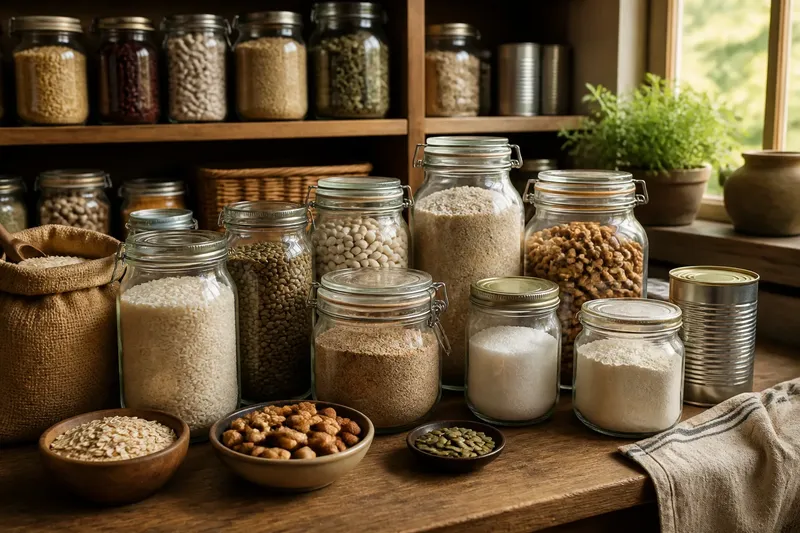
How long will your dry goods keep? The answer depends less on the word “dry” than on what is in the jar or sack, how it was packed, and where it sits. A bag of white rice and a tin of whole-grain flour may both feel dry, yet their fats, exposure to air and susceptibility to damp make them behave differently in a household store.
Thinking of shelf life as a single countdown can lead to the wrong choice: discarding food that remains sound, or keeping something whose quality has clearly slipped. A better approach is to sort provisions by their needs. Some are sensitive to oxygen and warmth; some mainly need protection from moisture; others are affected by light, pests or the packaging itself.
Start with the ingredient
Drying removes much of the water that microbes need to grow, but it does not stop every change. Oils can develop stale, paint-like or bitter notes; aromas can fade; and dry foods can absorb water from humid air. These changes vary with the ingredient, so a shared pantry shelf does not mean a shared keeping quality.
Whole grains and refined grains are a useful contrast. A whole grain retains its outer layers and germ, which contain oils; those oils can become stale over time, especially in warm storage. Refined grains have had much of that oily material removed, so they are generally less vulnerable to rancidity, though they still need to stay dry and free of pests.
Flour makes the difference easier to notice. Whole-wheat flour includes more of the grain’s oily parts than white flour, while nut flours and ground seeds are also rich in oils. Their fine texture exposes more surface to air than an intact kernel or seed. Keep these items in modest quantities if use is occasional, and consider a cool, suitable storage place for the more oil-rich kinds.
Dried beans, peas and lentils are low in fat, so rancidity is not usually the main quality concern. With age, however, they may take longer to soften, particularly if they have been stored in warm or damp conditions. They can remain useful for cooking, but a meal plan that depends on quick simmering may no longer suit an old, hard batch.
Salt and plain sugar are different again. They do not contain the oils that make whole-grain flour or nuts prone to stale flavors, but both can clump when moisture gets in. Salt may absorb moisture from humid air, and sugar can form hard lumps; clumping is a storage clue, not by itself proof that a product has spoiled.
Match the storage decision to the ingredient’s weak point, not just to the fact that it came in a bag.
Read the package condition
Packaging changes how much air, moisture, light and handling reach a product. An intact, sealed package generally offers a different level of protection from a paper sack folded closed after opening. A metal can, a glass jar and a flexible pouch also behave differently, but no material protects against every problem: a lid that does not close well can undo the advantage of a sturdy container.
Keep the original label whenever you transfer food. It can identify the contents and provide the manufacturer’s storage advice, including any instruction about refrigeration after opening. If you move a portion to a jar, write the product name and the date opened on the jar or a removable label. This is especially useful when several white powders or grains look alike.
Check the package before relying on it. Look for a torn seam, a loose lid, a pinhole, dampness, a swollen or damaged can, or webbing and insects near the food. A package can be clean on the outside while its closure has failed, so inspect the seal and the food’s appearance as well. If a container is damaged or the contents show signs of contamination, do not taste the food to decide whether it is acceptable.
For food safety, follow the product label and applicable local guidance; when there is a serious concern about contamination or an unusual odor, discard the food rather than trying to salvage it.
Choose a place by risk
A useful storage place is not simply a cupboard with empty space. Consider its temperature, humidity, light, proximity to heat and how often the door is opened. A shelf beside an oven may be convenient but warm; a cupboard near a sink may be exposed to damp; a clear jar on a sunny sill may show its contents while letting light reach them.
For oil-rich foods such as nuts, seeds and whole-grain flour, favor a cool, dark place and a container that closes well. If you use them slowly, buy an amount suited to your household’s pace rather than keeping a large open supply. Some products may be stored in a refrigerator or freezer if the package directions support it and the container protects them from moisture and odors.
For dry staples that mainly need protection from damp and pests, choose a clean, dry cupboard with stable conditions. Airtight food-safe containers can be useful after opening, especially when the original package is awkward to reseal. Make sure the food and container are dry before filling; sealing dampness inside does not make the contents safer.
For foods that lose aroma, such as dried herbs and ground spices, an opaque, tightly closed container away from heat helps preserve flavor. That is a quality choice, not a promise of indefinite keeping. If a seasoning smells faint or tastes flat in a prepared dish, replacing it may make more sense than adding ever larger pinches.
- If the food is rich in oils, prioritize cool, dark storage and a tight closure.
- If dampness is the main concern, keep the container dry, sealed and away from sinks or steam.
- If aroma matters, reduce exposure to light, heat and repeated opening.
- If the package is damaged or pests are present, treat the problem as a condition issue, not a date question.
Sort by your situation
What if I use the food slowly?
Choose smaller quantities for foods whose flavor changes with air exposure, especially ground nuts, seeds and whole-grain flour. Divide a larger purchase into clean, dry, tightly closed portions if the label allows, keeping the active portion accessible and protecting the rest from repeated opening.
What if the package is already open?
Reseal it promptly or transfer the food to a clean, food-safe container with a close-fitting lid. Keep the product name and relevant date information with it, and check the remaining contents for dampness, insects or an unusual smell before using.
What if a staple is old but looks normal?
Use the ingredient’s likely quality change to guide the decision. Old dry beans may need more cooking time, while oil-rich flour may have an unpleasant stale aroma; normal appearance alone does not settle either question.
Can I trust a printed date?
Read the wording on the package and treat it as one part of the decision, not a substitute for checking storage and condition. Date labels can describe quality guidance, while the product’s instructions and local food-safety guidance matter for specific safety questions.
Use a careful check
When you open a package, look before you pour. Search for clumps that suggest moisture, insects or webbing, discoloration, and any change in smell. A normal appearance and smell are useful observations, but they cannot rule out every hazard, so do not use tasting as a safety test.
Say you have an open sack of whole-wheat flour, a sealed bag of white rice and a jar of dried beans. You use flour only occasionally, while rice and beans appear in regular meals. You could move the flour into a labeled, airtight container and store it in a cooler, darker place if its package guidance permits; keep the rice sealed and dry; and leave the beans in a clean, pest-resistant container. The expected observable result is not a fixed extra period of storage, but fewer opportunities for the flour to pick up stale odors and for the other staples to absorb moisture or attract pests.
Use the same reasoning when deciding what to cook first. Choose the most vulnerable open item when it still appears sound and suits the meal, rather than assuming the oldest package always deserves priority. If an item has clear signs of contamination or a suspect odor, do not let its place in the queue persuade you to use it.
Keep dates in context
A date on a package cannot account for every household’s conditions. A dry, cool cupboard and a warm, humid shelf are not equivalent, and a package left open behaves differently from one that stays sealed. Dates are most useful alongside the product name, opening date, package condition and storage history.
For a small store, a pencil note on the container can make that context visible without turning storage into bookkeeping. Mark when you opened an item, then check it when you reach for it. This creates a practical record of how long a particular product tends to remain pleasant in your own cupboard, while leaving safety decisions to the food’s condition and reliable guidance.
Dry goods shelf life is therefore a question of fit: the ingredient’s composition, the barrier its package provides and the conditions in its storage place. If you remember only one distinction, give oil-rich foods more protection from air and warmth, and give every dry provision steady protection from damp and pests. A small change in where an open package sits can help preserve quality without pretending every pantry item keeps alike.