A Spring Seed-Sorting Afternoon
A spring seed-sorting afternoon helps you identify packets, group seeds by season and intended place, and set aside anything that needs a closer look.
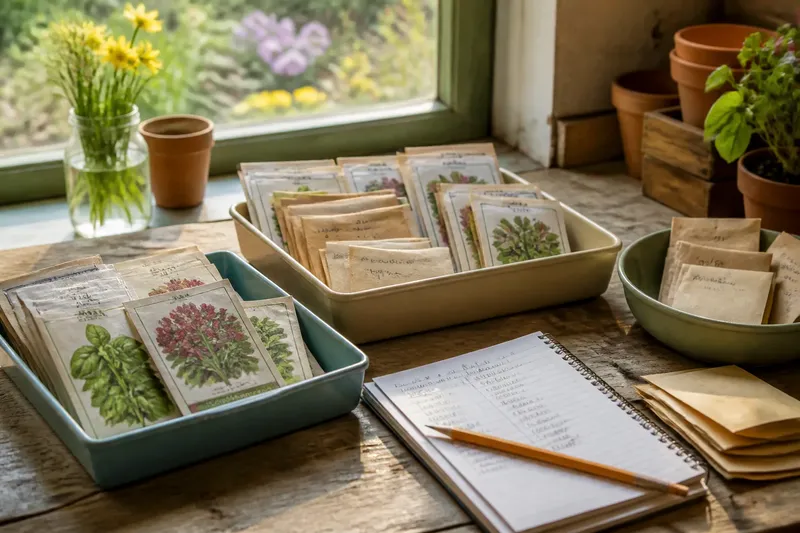
How do you sort a jumble of seed packets without turning a quiet spring afternoon into a growing plan you are not ready to make? A spring seed-sorting afternoon can be just a way to identify what is on hand, group it by season and intended place, and mark questions for later. The useful result is a set of clear, modest choices—not a commitment to sow every seed.
Gather the packets, any saved seed envelopes, a pencil, scrap paper, and a few small trays or bowls. Choose a dry, comfortable spot with enough light to read labels. Keep the work focused: identify, group, and note. Decisions about what will grow well can wait until you have considered your own conditions.
A Spring Seed-Sorting Afternoon
The most common snag is beginning with a goal that is too large. “Plan the whole garden” invites decisions about beds, timing, and quantities before you know what the packets say. Set a smaller boundary instead: sort the seeds you already have, and leave a blank space on the table for items that need more attention.
Make three temporary groups: readable packets, packets with something unclear, and saved seeds whose identity or collection details need checking. These are working groups, not judgments about whether a seed is usable. A faded name belongs in the unclear group even if the envelope looks tidy; a clearly labeled packet with an unfamiliar plant name can go with readable items.
Start with what you can verify on the packet itself. Copy the plant name as printed, along with any visible notes about sowing season or suggested location. Do not fill gaps from memory when you are unsure. A question mark in your notes is more useful than a confident but possibly wrong label.
Keep the first pass light. If a label is legible, record it and move on; if it is not, set the packet aside for a closer look.
Names That Do Not Match
Two packets may appear to contain the same plant but use different names, spellings, or varieties. The reverse can happen too: similar-looking names may refer to distinct plants. The usual cause is a partial label, handwriting, or a name remembered from a conversation rather than copied from the packet.
Preserve the wording on each original packet before trying to reconcile it. If you recognize a common name but cannot confirm the variety, write the common name and add “variety unclear.” If two labels seem related, keep their records separate until you have enough information to tell whether they refer to the same seed.
Imagine you find one packet marked “basil” and a saved envelope marked only “purple.” Write both descriptions exactly as you see them, then note that the saved seed’s plant identity is uncertain. The observable result is a pair of honest records rather than a false match that could confuse you later.
Use pencil on temporary notes so that corrections are easy. Keep the original label with its packet whenever possible; a copied note should not replace information you may need to revisit.
Seasons That Seem Unclear
Packets may refer to a sowing season, a season for setting plants out, or a harvest period. Those phrases describe different parts of growing, so a broad word such as “spring” may not answer the question you have. The cause of confusion is often a short instruction read without its surrounding words.
Copy the instruction with its context rather than reducing it to a single season. For example, distinguish “start indoors” from “sow outdoors” if the packet does. If the label names no season, record that it is unstated rather than assigning one based on the plant name alone.
This sorting session is not the moment to decide that a packet’s timing suits your household. Local weather, available space, and your own routine may change what you choose to do. The notes simply preserve the information for a later decision.
If you cannot tell what an instruction means, mark it for review instead of placing the packet in a guessed season group.
Places That Need Clarifying
A label may suggest a place such as a container, a sheltered spot, or open ground, while your available growing space is different. Sometimes the packet gives only a vague location; sometimes you have not yet decided where anything will go. In either case, sorting by intended place means recording the suggestion or your tentative idea, not making a final planting choice.
Make simple place headings such as “possible container,” “possible bed,” and “not decided.” Add a note when the packet itself names a setting, and keep your own idea visibly separate from that instruction. This prevents a personal guess from being mistaken for something the label actually says.
Say you have a packet whose label suggests a sunny border, but the only space you are considering is a pot near a doorway. Write “label: sunny border” and “possible place: pot; check later.” The result is a useful prompt for future planning without assuming the two settings are interchangeable.
Do not sort every seed into a place just to make the groups look complete. “Not decided” is a valid place for a packet when conditions are still unknown.
What Should Be Set Aside?
What if a packet has no name?
Keep it separate from identified seeds and preserve any remaining clues, such as a note on the envelope or the source written on it. If you cannot establish the identity, label it “unknown” rather than assigning a plant name from appearance alone.
What if the date is missing?
Record that the date is absent, then leave any decision about using the seed for later. A missing date does not by itself tell you what the seed is or whether it suits your plans.
What if saved seeds are mixed?
Do not combine them with a clearly identified batch unless you can verify that they belong together. Keep the envelope as found and note that its contents may include more than one kind.
What if packet instructions differ?
Write down each instruction with the packet it came from instead of averaging them into one rule. Differences may reflect distinct varieties or different advice, and the label or supplier information is the place to check before acting.
Notes That Stay Useful
A good sorting note is brief enough to read at a glance. Include the name as printed, the season or place wording that is actually present, and one unresolved question if needed. Avoid making a full growing record unless you already want one; this afternoon is for keeping household seed information legible.
- Copy plant names without silently correcting uncertain spelling.
- Separate packet instructions from your own possible plans.
- Mark unclear identities rather than guessing.
- Keep saved seeds with the note or envelope that came with them.
- Leave a “not decided” group for choices that depend on your conditions.
When a question depends on a seed label, manufacturer instructions, or local rules, check the relevant source before acting. For general sorting, however, a plain note and a separate place for uncertainty are often enough.
Close the Session Gently
Before putting anything away, return each packet to its note or temporary group and check that no saved-seed envelope has lost its identity clues. Keep the groups together in a dry, orderly household spot appropriate to your storage arrangements. You do not need to settle every question before the afternoon ends.
Leave yourself one short list of items to revisit: perhaps a faded name, an unexplained instruction, or a place you have not chosen. A spring seed-sorting afternoon has done its work when the packets are easier to understand and the unanswered decisions are visible. That is enough to make the next look at your seeds more useful, while leaving every growing choice to your own conditions.